Why Does My Cat Lick Me? Understanding Feline Affection
Related reading: Why Does My Cat Bite Me?.
For general feline health context, the Merck Veterinary Manual cat-owner pages are a reliable starting point, and your veterinarian should guide individual decisions.
Cats are famously mysterious creatures, and their behaviors often leave their owners with many questions. One such common behavior is when a cat licks its owner, which can seem affectionate yet puzzling. Why do cats engage in this behavior? Is it a sign of love, a call for attention, or something deeper? This article will explore why your cat might be licking you and what it signifies about your relationship with your furry friend.
Feline Grooming Instincts: Born to Lick
One of the primary reasons cats lick is deeply rooted in their grooming instincts. Cats are clean animals and spend a substantial portion of their day grooming themselves. This behavior isn’t just about cleanliness; it also helps regulate their body temperature, maintain their coat’s health, and reduce stress. When your cat licks you, they may be expressing their grooming instincts by including you in their ‘family’ cleaning routine, a sign of trust and affection.
Grooming behavior also plays an important role in a cat’s early life. From the moment kittens are born, their mother licks them to clean and bond with them. As they grow, they learn to reciprocate this action with their siblings, creating social bonds. By licking you, your cat may be expressing a similar social bond, showing they consider you a part of their inner circle.
Affection and Bonding: A Sign of Love
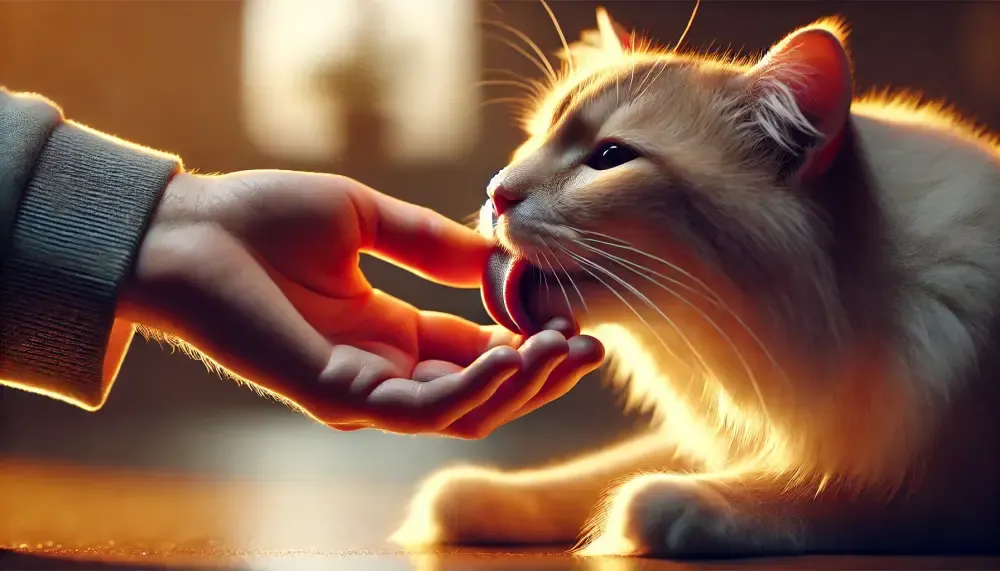
In the animal kingdom, licking is a common way to show affection, and cats are no exception. When a cat licks their owner, it is often an expression of closeness and affection. It’s akin to a human offering a hug or kiss. This is why some cat owners notice their cats licking them when they’re relaxed or cuddling; it’s a way of saying, “I care about you.”
Interestingly, each cat has a unique way of displaying affection. While some may prefer curling up next to you, others show love by grooming you with a few licks. If your cat frequently licks you, especially in calm, quiet moments, it’s a clear sign that they feel bonded and comfortable with you.
Marking Territory: Claiming You as Their Own
Cats have scent glands in various parts of their body, including their tongues. When your cat licks you, they’re not only showing affection but also marking you as part of their territory. This behavior, called “allorubbing” or “allogrooming,” is how cats create and maintain a sense of community and belonging within their family or group. By licking you, they are subtly marking you with their scent, which helps them feel secure knowing that their environment is filled with familiar scents.
This behavior is often seen between cats that live together, especially if they’re close and comfortable around each other. If you have multiple cats, you may notice them grooming each other in a similar way. If your cat licks you as part of this behavior, consider it a form of claiming and cherishing you within their family circle.
Stress Relief and Comfort
For many cats, licking provides a sense of relief and comfort, much like humans might find solace in repetitive actions like knitting or tapping their fingers. When a cat feels anxious, they may lick to soothe themselves. This is called “displacement behavior” and serves as a coping mechanism for stress.
If you notice your cat licking you during moments of high stress or when there are changes in the household, they may be seeking comfort. This type of licking tends to be more repetitive and may even extend to fabric or other objects. Understanding your cat’s stress triggers and providing a calming environment can help reduce this type of licking behavior.
Attention-Seeking: “Hey, Look at Me!”
Cats, known for their independence, sometimes crave attention just as much as any other pet. If your cat realizes that licking you often elicits a response, they may use it as a method to get your attention. Cats are observant and intelligent creatures, and if licking results in petting, talking, or cuddling, they’ll remember this.
In some cases, your cat may also try to redirect your focus if you’re distracted by something else, like a phone or book. A few licks here and there are often their way of saying, “Don’t forget about me!” Paying attention to your cat’s body language and signals can help distinguish when they’re asking for attention and when they’re simply showing affection.
Health Reasons: Exploring Skin and Tastes
Occasionally, a cat’s licking behavior may be triggered by curiosity about your skin or any products you’ve applied, like lotions or perfumes. Cats are intrigued by different tastes and smells and may lick your skin to investigate. Some lotions, perfumes, or even the natural salt on your skin can attract your cat’s attention, leading them to give a quick lick or two.
If you notice your cat becoming overly focused on a specific area, it’s also worth considering a potential health issue. Cats are incredibly sensitive to changes in their environment and can sometimes detect unusual scents that indicate skin conditions or infections. In rare cases, a cat might persistently lick an area if it senses something unusual. If this behavior continues, it’s a good idea to consult your veterinarian to rule out any underlying issues.
Playfulness and Curiosity
Lastly, licking can also be a playful gesture, especially if your cat follows it up with playful bites or pats. Some cats have a more energetic personality and may start licking during playtime. For them, it’s all part of their interactive experience with you. This playful behavior can add a fun and bonding element to your relationship, showcasing their unique personality.
If your cat is more playful by nature, you may notice that the licking is followed by paw batting or gentle nipping. In this case, it’s simply a part of their play and a display of their joyful interaction with you. Be sure to set boundaries if the licking or nipping gets too intense, gently redirecting them with toys or other positive reinforcement.
Should You Encourage or Discourage the Behavior?
If you enjoy your cat’s affectionate licks, there’s no harm in encouraging this behavior. It’s a natural way for them to connect and show love. However, if the licking becomes excessive or uncomfortable, there are gentle ways to redirect your cat’s behavior without causing stress.
Consider offering them a cozy blanket or toy when the licking becomes too much. You can also distract them with a treat or engage them in playtime. Patience is key, as cats often respond best to subtle redirection rather than reprimand.
Understanding why your cat licks you can help you strengthen your bond and appreciate their unique expressions of affection. Licking may stem from grooming instincts, affection, a need for comfort, or even curiosity. Each cat is unique, and their licking behavior offers a glimpse into how they feel about their environment—and their favorite humans. Embrace this natural form of bonding, and take it as a reminder that you’re a cherished part of their world.