Eye Infections in Dogs: Causes, Symptoms, and Treatments
For a related health topic, see Ear Infections in Dogs: Causes, Symptoms, and Effective Treatments. That article is also not a substitute for a veterinary exam.
This is general information, not a diagnosis. The Merck Veterinary Manual dog-owner pages are a reliable place to read more before you talk with your veterinarian.
Eye infections in dogs are a common health issue that can cause discomfort and even lead to more severe problems if left untreated. As a responsible pet owner, understanding the causes, symptoms, and treatments for eye infections in dogs is crucial to ensuring your furry friend’s eye health and overall well-being. This article explores the various aspects of dog eye infections, providing you with the knowledge to recognize and address these issues promptly.
Causes of Eye Infections in Dogs
Several factors can contribute to eye infections in dogs. Identifying the underlying cause is essential for effective treatment. Common causes include:
- Bacterial Infections:
- Bacteria such as Staphylococcus and Streptococcus can enter a dog’s eye through injuries or environmental exposure, leading to infections.
- Viral Infections:
- Viruses like canine distemper or canine herpesvirus can cause eye infections, often accompanied by other systemic symptoms.
- Fungal Infections:
- Fungal spores from the environment can infect a dog’s eyes, especially in areas with high humidity.
- Foreign Bodies:
- Dust, dirt, grass seeds, or other foreign objects can irritate the eye and introduce bacteria, resulting in an infection.
- Allergies:
- Allergic reactions to pollen, dust mites, or certain foods can cause eye irritation and secondary infections.
- Trauma:
- Scratches or injuries to the eye can become infected if not properly treated.
- Underlying Health Conditions:
- Conditions like dry eye (keratoconjunctivitis sicca) or eyelid abnormalities can predispose dogs to eye infections.
Symptoms of Eye Infections in Dogs
Recognizing the symptoms of an eye infection early can help prevent complications and ensure timely treatment. Common symptoms include:
- Redness: Inflammation of the eye, causing it to appear red or bloodshot.
- Swelling: Puffiness around the eye or eyelids.
- Discharge: Yellow, green, or white discharge from the eye, often accompanied by crusting around the eye.
- Squinting or Blinking: Increased blinking or squinting due to discomfort or pain.
- Tearing: Excessive tearing or watery eyes.
- Pawing at the Eye: Dogs may rub or paw at their eyes to relieve discomfort.
- Cloudiness: A cloudy appearance in the eye, indicating possible corneal involvement.
- Behavioral Changes: Reluctance to play, eat, or interact due to eye pain.
Diagnosing Eye Infections in Dogs
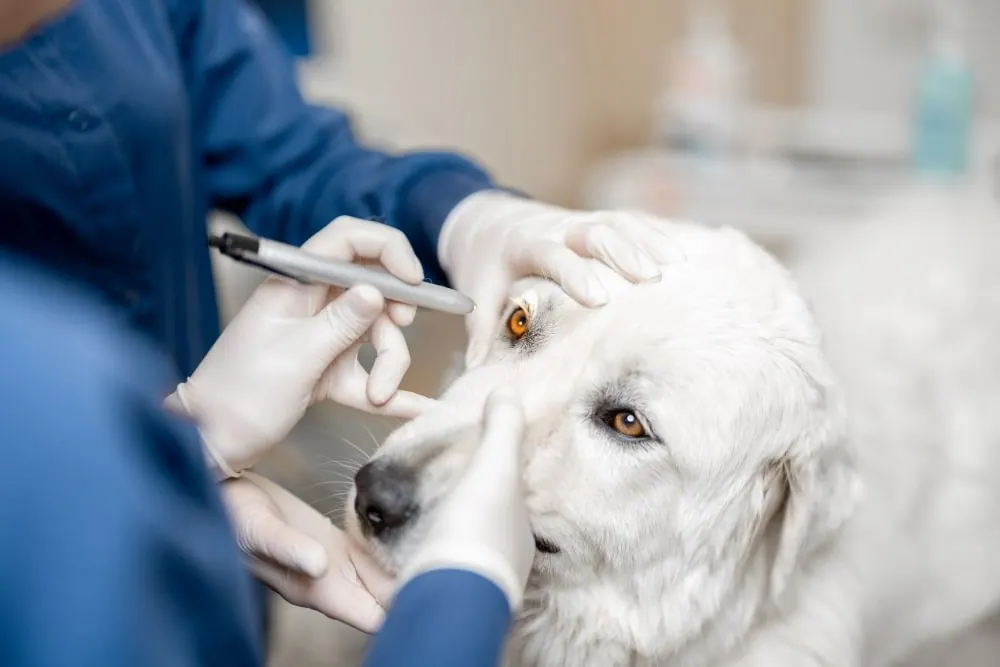
If you suspect your dog has an eye infection, it is essential to seek veterinary care. A veterinarian will conduct a thorough examination, which may include:
- Physical Examination: Checking for signs of redness, swelling, discharge, and foreign bodies.
- Fluorescein Stain Test: Applying a fluorescent dye to the eye to detect corneal ulcers or scratches.
- Schirmer Tear Test: Measuring tear production to diagnose dry eye.
- Culture and Sensitivity Test: Collecting a sample of the discharge to identify the causative agent and determine appropriate antibiotics.
- Ophthalmoscopy: Examining the internal structures of the eye for any underlying conditions.
Treatment of Eye Infections in Dogs
Treatment for eye infections in dogs depends on the underlying cause and severity. Common treatment options include:
- Antibiotic or Antiviral Medications:
- Prescribed in the form of eye drops or ointments to combat bacterial or viral infections.
- Anti-inflammatory Medications:
- Used to reduce inflammation and discomfort.
- Fungal Treatments:
- Antifungal medications may be necessary for fungal infections.
- Eye Wash Solutions:
- Saline solutions can help flush out irritants and discharge.
- Warm Compresses:
- Applying warm compresses to the affected eye can alleviate discomfort and reduce swelling.
- Elizabethan Collar:
- Preventing the dog from rubbing or scratching the infected eye, which can worsen the condition.
- Surgery:
- In severe cases or when foreign bodies are involved, surgical intervention may be required.
Preventing Eye Infections in Dogs
Prevention is always better than cure. Here are some tips to help prevent eye infections in dogs:
- Regular Cleaning:
- Clean your dog’s eyes gently with a damp cloth to remove dirt and discharge.
- Grooming:
- Keep the hair around your dog’s eyes trimmed to prevent irritation and accumulation of debris.
- Environmental Control:
- Minimize exposure to irritants such as dust, smoke, and chemicals.
- Protective Gear:
- Use dog goggles to protect your pet’s eyes during outdoor activities in dusty or windy conditions.
- Regular Vet Check-ups:
- Regular veterinary visits can help detect and address eye issues early.
- Proper Nutrition:
- A balanced diet supports overall health, including eye health.
When to Seek Veterinary Care
Prompt veterinary care is essential if you notice any signs of an eye infection in your dog. Delaying treatment can lead to complications, including:
- Corneal Ulcers: Untreated infections can cause painful ulcers on the cornea, leading to vision loss.
- Blindness: Severe or prolonged infections can result in permanent blindness.
- Systemic Infection: Eye infections can sometimes spread to other parts of the body, causing more severe health issues.
Conclusion
Eye infections in dogs are a serious concern that requires prompt attention and proper treatment. By understanding the causes, symptoms, and treatment options, you can help ensure your dog’s eyes remain healthy and infection-free. Regular veterinary check-ups, good hygiene, and preventive measures can go a long way in safeguarding your pet’s eye health. Always consult with your veterinarian if you suspect an eye infection to provide your dog with the best care possible.
Maintaining your dog’s eye health is crucial for their overall well-being. By staying informed and proactive, you can help your furry friend lead a comfortable and healthy life, free from the discomfort and complications of eye infections.


