Why Do Dogs Wag Their Tails?
For general pet-health questions, the AVMA pet-owner resources are a reliable starting point, and your veterinarian should guide individual decisions.
Dogs are known for their expressive nature and interesting ways to communicate with each other, and one of the most iconic behaviors they exhibit is tail wagging. This seemingly simple action carries a wealth of information about a dog’s emotional state, intentions, and even their social standing. Understanding why dogs wag their tails can enhance our interactions with them and deepen the bond between pets and their owners.
The Basics of Tail Wagging
Tail wagging is a form of non-verbal communication used by dogs to convey a variety of emotions and intentions. Contrary to popular belief, a wagging tail does not always mean that a dog is happy. The context of the situation, the motion of the tail, and the overall body language of the dog all contribute to the message being conveyed.
At its core, tail wagging is a reflexive response linked to the nervous system of dogs. It starts from a very young age, as puppies begin to wag their tails as early as three to four weeks old. This behavior is thought to be influenced both by genetics and environment, evolving as a social signal that plays a crucial role in the interaction among dogs and between dogs and humans.
Emotional Expression
One of the primary reasons dogs wag their tails is to express their emotions. Different emotions can be expressed depending on how the tail is wagged:
- Happiness: A relaxed, wagging tail usually indicates that a dog is happy or content. This is often seen when you come home and your dog greets you with a vigorously wagging tail.
- Excitement: When a dog is excited, their tail tends to wag more energetically. This can occur during playtime or when they anticipate something enjoyable, like a walk or a treat.
- Anxiety or Submissiveness: A slow wag with the tail held lower than usual can indicate insecurity or submissiveness. Dogs might display this type of wagging in new or uncertain situations.
- Aggression: A tail that is held high and wags stiffly can be a sign of aggression. This is a warning from the dog that it may be feeling threatened and is prepared to defend itself.
Communication and Social Interaction
Tail wagging also serves as a crucial tool in canine social interactions. Dogs use their tails to signal their social status and intentions to other dogs. For example, dominant dogs might hold their tails high and stiffly to display confidence and authority, while more submissive dogs hold their tails lower and may wag them gently to signal peace and non-threat.
In group settings, dogs often observe the tail position and movement of other dogs to gauge how to approach or interact with them. This can prevent conflicts and help maintain harmony within the group.
Physiological Reasons
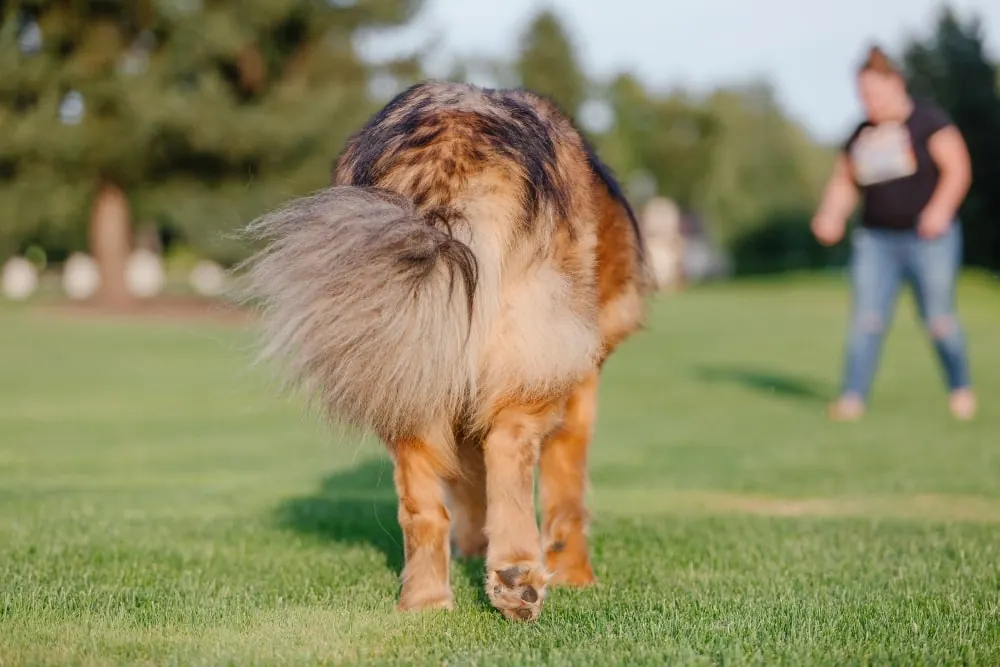
Besides emotional and communicative purposes, tail wagging can also have physiological reasons. For instance, wagging helps spread the natural scent from the anal glands, which is a major way dogs mark their territory and identify each other. This scent spreading is especially noticeable in social situations where dogs want to leave their mark or assert their presence.
Human-Dog Relationships
Interestingly, research suggests that dogs may have developed a specific type of tail wagging behavior in response to human interaction. Studies have shown that dogs tend to wag their tails more to the right when they are happy and to the left when they are nervous or stressed. This asymmetric tail wagging could be an adaptation to better communicate with humans, who are more likely to notice and respond to such cues.
Summary
Tail wagging is a multifaceted behavior that serves many purposes in a dog’s life, from expressing emotions and communicating with others to physiological benefits. By understanding the nuances of tail wagging, dog owners and enthusiasts can better interpret what a dog is feeling or trying to say, which can lead to more respectful and enriching interactions. Whether it’s a gentle wag in a quiet home or an excited flutter in a bustling park, each wag has a story to tell, enhancing the deep bond shared between dogs and humans.