Can Cats Eat Eggs? A Complete Guide for Cat Owners
If you are unsure whether a food is safe, the ASPCA’s list of people foods to avoid feeding pets is a reliable starting point, and a veterinarian or poison-control professional should be called if a pet already ate something questionable.
Eggs are well-known for being nutrient-dense foods packed with high-quality protein, vitamins, and minerals. But when it comes to feeding them to your cat, you may wonder if they’re safe. Cats, as obligate carnivores, require a diet high in animal protein, so eggs could seem like a natural treat to offer. In this article, we’ll explore whether cats can eat eggs, how to prepare them safely, and any health considerations to keep in mind.
Nutritional Benefits of Eggs for Cats
Eggs offer numerous nutritional benefits that could complement a cat’s diet when served correctly. Here’s a breakdown of what makes eggs nutritious for cats:
- High-Quality Protein: Eggs are a complete protein source, containing all essential amino acids. Cats thrive on protein, which supports their muscles, skin, and fur health.
- Rich in Vitamins: Eggs contain vitamins like Vitamin A, D, E, B12, and riboflavin, which promote vision, immune system health, and cell repair.
- Essential Minerals: Minerals such as selenium and iron in eggs are beneficial for metabolic function, immune system health, and red blood cell production.
- Healthy Fats: Eggs contain moderate levels of healthy fats, which provide energy and support skin health.
While eggs provide a nutrient boost, they’re best served as an occasional treat rather than a dietary staple.
Are Eggs Safe for Cats?
Yes, eggs can be safe for cats, but only if they are cooked. Raw eggs, on the other hand, carry potential risks that could harm your cat. Here’s a closer look:
Cooked Eggs vs. Raw Eggs
- Cooked Eggs: When eggs are cooked, they are generally safe and nutritious for cats. Cooked eggs eliminate harmful bacteria and preserve their nutrients.
- Raw Eggs: Feeding raw eggs is risky because they may carry bacteria like Salmonella or E. coli, which can cause food poisoning in cats. Additionally, raw egg whites contain avidin, an enzyme that interferes with biotin absorption, a necessary B vitamin.
For these reasons, it’s always best to serve eggs cooked and unseasoned.
Safe Ways to Serve Eggs to Your Cat
If you want to add eggs to your cat’s diet, it’s crucial to serve them in a way that’s safe and easy to digest. Here are a few preparation tips:
- Boiled Eggs: Hard-boiled eggs are simple and easy for your cat to enjoy. Chop up a small piece and offer it as a treat.
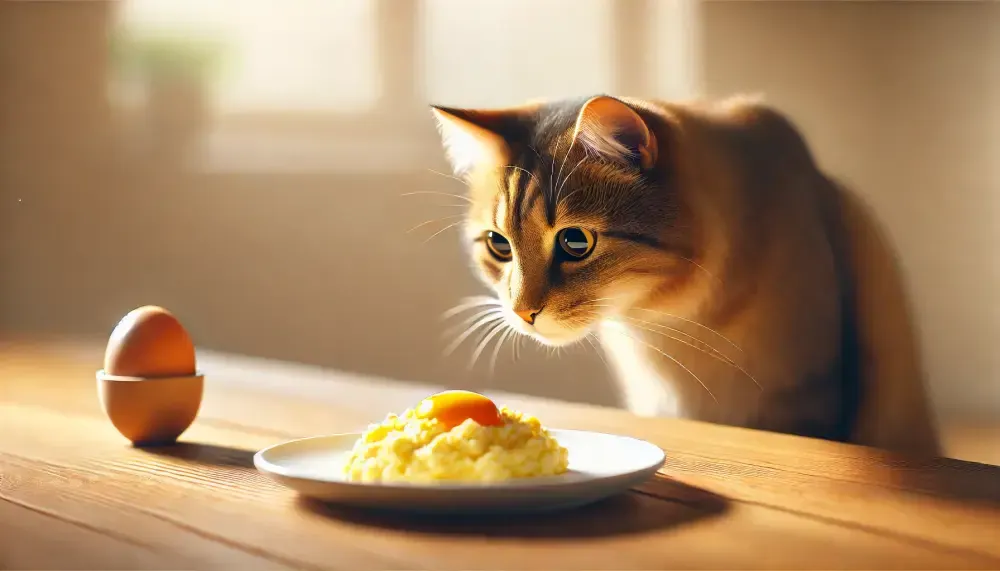
- Scrambled Eggs: Plain, scrambled eggs (without added butter, salt, or seasoning) are another safe option. Use a non-stick pan to cook a small amount.
- Poached Eggs: Lightly poaching eggs is also safe, as long as the egg is fully cooked. Be sure to avoid runny egg yolks, which may still contain bacteria.
When serving eggs, remember that moderation is key. A small amount, around a teaspoon per serving, is usually enough.
How Often Can Cats Eat Eggs?
Although eggs can be a nutritious addition, they should only be served occasionally due to their high protein and fat content. If a cat consumes too much protein, it may lead to weight gain and strain their kidneys. A good guideline is to offer eggs once or twice a week as a treat. Always monitor your cat’s reaction after serving eggs for the first time to ensure there are no allergic reactions or digestive issues.
Potential Health Risks of Feeding Eggs to Cats
While eggs are generally safe for cats, there are some potential risks and concerns to consider:
- Allergic Reactions: Some cats may have egg allergies, which can lead to symptoms like itching, gastrointestinal upset, or even respiratory problems. If your cat shows any signs of an allergic reaction, avoid feeding eggs and consult your veterinarian.
- Digestive Upset: Eggs are rich in fats and proteins, which can cause digestive upset in some cats if fed in excess. Cats with sensitive stomachs may experience vomiting or diarrhea after eating eggs.
- Obesity and Pancreatitis: Regularly feeding eggs in large amounts could lead to obesity and even pancreatitis due to the high-fat content. Pancreatitis, an inflammation of the pancreas, can cause severe abdominal pain, vomiting, and lethargy.
Are Eggs Necessary in a Cat’s Diet?
Eggs are not essential in a cat’s diet, as high-quality commercial cat foods already provide the necessary nutrients for your cat’s health. However, when given as an occasional treat, they can be a fun, nutritious addition to your cat’s diet. It’s always best to consult with your veterinarian before adding any new foods to your cat’s routine, especially if they have specific health issues.
Frequently Asked Questions About Feeding Eggs to Cats
Can Kittens Eat Eggs?
While kittens can technically eat eggs, it’s best to introduce eggs only after they have transitioned to solid food and only in small amounts. Since kittens require a very specific balance of nutrients for growth, their diet should primarily consist of high-quality kitten food.
Is the Eggshell Safe for Cats?
Eggshells are safe for cats and can even be beneficial as they contain calcium. However, it’s essential to grind them into a fine powder before serving. Small amounts can be sprinkled on your cat’s food, but it’s best to consult a vet first to ensure the appropriate amount.
Can Cats Eat Egg Yolk?
Yes, cats can eat egg yolks, but they should be fully cooked and given sparingly due to their high fat content. Yolks are rich in vitamins and minerals but should only be served in moderation.
What if My Cat Doesn’t Like Eggs?
Not all cats will enjoy the taste of eggs, and that’s perfectly normal. Cats can be picky eaters, and if your cat doesn’t like eggs, there are plenty of other healthy treats you can offer, such as cooked chicken or small pieces of tuna.
- Always Cook the Eggs: Raw eggs can carry bacteria that pose health risks for your cat.
- Avoid Seasonings: Eggs should be served plain, as seasonings like salt, garlic, and onions are harmful to cats.
- Start with Small Portions: Begin with small portions and observe how your cat responds before making eggs a regular treat.
Eggs can be a nutritious and safe treat for your cat when cooked and served appropriately. However, always prioritize a balanced, species-appropriate diet and consult your veterinarian before introducing any new foods. With proper care, you can give your cat a treat they’ll love without compromising their health.