How to Choose a Dog Collar: Fit and ID First, Not a Shock Collar
The best collar is one that fits, does not rub or tighten dangerously, and matches how you actually walk and identify your dog. A flat collar with current ID is useful for tags; a well-fitted no-pull harness is often a kinder tool than a tight collar for a dog who pulls. Measure the neck, check that you can fit two fingers under the collar, and do not leave a slip or head collar on an unsupervised dog. Retractable leashes and poorly fitted gear make pulling harder to manage.
For general pet-health questions, the AVMA pet-owner resources are a reliable starting point, and your veterinarian should guide individual decisions.
Related reading: Rash on a Dog’s Belly and Inner Thighs: Get a Diagnosis First.
Shock or e-collars are controversial and can worsen fear or aggression in some dogs. They are not a first-line tool, and this page does not promote them as a starter option. Start with fit, rewards, and a qualified trainer. If the neck is raw, hair is missing, or the dog coughs when the leash tightens, change the gear and ask your veterinarian.
As an Amazon Associate, we earn from qualifying purchases.
Selecting the perfect collar for your dog is not just a matter of style or fashion; it’s an essential aspect of their safety and comfort. With the myriad of options available in the market, choosing the right dog collar can seem overwhelming. This comprehensive guide aims to simplify the process, covering everything from sizing to materials, and highlighting the key considerations to make an informed decision. Whether you’re a new dog owner or looking to upgrade your furry friend’s collar, here’s everything you need to know to choose the best dog collars for your dog.
Understand Your Dog’s Needs
Before diving into the plethora of collar options, it’s important to consider your dog’s specific needs. Factors such as your dog’s size, breed, temperament, and daily activities play a crucial role in determining the most suitable type of collar. For instance, a sturdy, reflective collar may be ideal for an active, large breed dog, while a small, decorative one might be more suitable for a smaller, less active pet.
Types of Dog Collars
- Standard Collars: Ideal for everyday use, these collars are suitable for dogs that don’t pull on their leash excessively and don’t have any special training or health requirements.
- Martingale Collars: Designed for breeds with narrower heads, such as Greyhounds, martingale collars tighten slightly when a dog pulls on the leash, preventing them from slipping out.
- Harnesses: Not a collar per se, but a harness can be a good alternative for dogs that pull hard or have respiratory issues, as it distributes the force across the body.
- Head Collars: For dogs that pull excessively, head collars can help control the direction of your dog’s movement without causing strain on the neck.
- Shock Collars: These are controversial and can worsen fear or aggression in some dogs. They are not a first-line tool. Start with a well-fitted harness, rewards, and a qualified trainer.
See top-rated Dog Collars on Amazon
Material Matters
The material of the dog collar is another important factor to consider, as it affects both comfort and durability. Here are the most common materials:
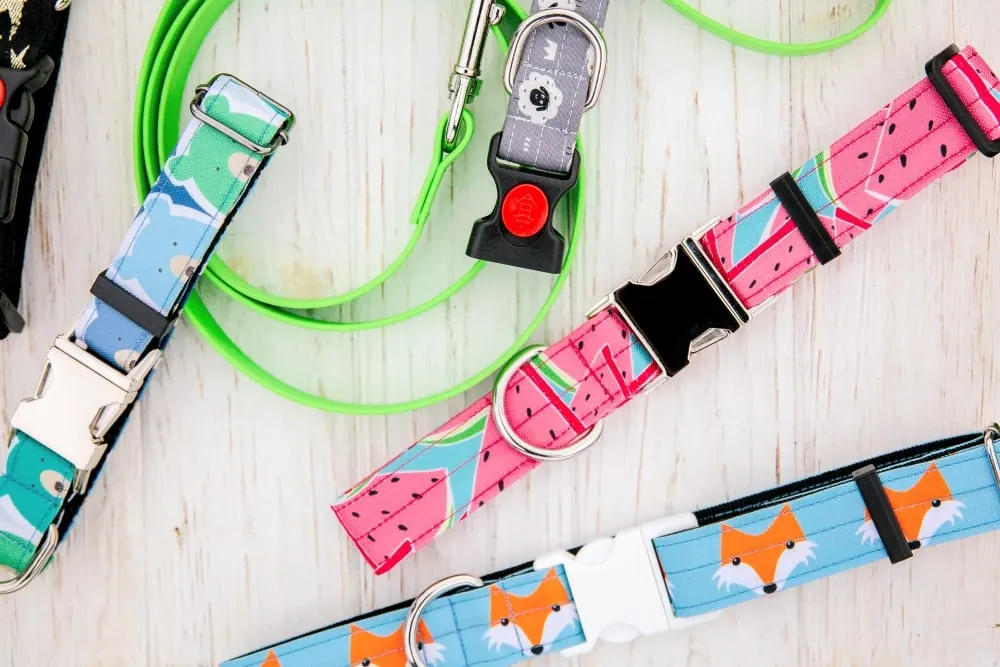
- Nylon: Versatile and available in a variety of colors and patterns, nylon collars are durable and suitable for most dogs.
- Leather: A classic choice that ages well, leather collars are sturdy and long-lasting, ideal for larger, stronger dogs.
- Metal: Chain collars, often used for training, can be effective for controlling large, strong dogs but should be used with caution and guidance from a professional trainer.
- Eco-friendly Materials: For the environmentally conscious, collars made from recycled materials or sustainable resources like bamboo are increasingly available.
Sizing and Fit
Choosing the correct size and ensuring a proper fit is crucial for your dog’s comfort and safety. A collar that’s too tight can cause discomfort or even injury, while one that’s too loose could slip off, putting your dog at risk. Here’s how to get it right:
- Measure Your Dog’s Neck: Use a flexible tape measure to get an accurate measurement of your dog’s neck, then add two inches to that measurement for the proper collar size.
- Check for Fit: You should be able to comfortably fit two fingers between the collar and your dog’s neck. This ensures that the collar is snug enough not to slip off but not so tight as to cause discomfort.
Reflective and Personalized Options
For dogs that spend time outside at night or have a tendency to wander, reflective collars or those with built-in LED lights can provide added visibility and safety. Personalized collars with your dog’s name and your contact information are also a great choice for extra peace of mind.
See top-rated Reflective collars for dogs on Amazon
Maintenance and Care
Keeping your dog’s collar clean and in good condition is essential. Regularly inspect the collar for signs of wear and tear, especially if your dog is active or spends a lot of time outdoors. Each material requires different care, so be sure to follow the manufacturer’s instructions for cleaning and maintenance.
Choosing the right collar for your dog ensures their safety, comfort, and happiness during walks, playtime, and rest. By considering your dog’s specific needs, understanding the different types of collars available, selecting the appropriate material, ensuring the right fit, and maintaining the collar properly, you can make an informed decision that benefits both you and your furry friend. Remember, the best dog collar is one that suits your dog’s lifestyle and personality while providing safety and comfort.
A collar should still carry ID, and a GPS tracker is a separate device with its own battery and usually a subscription. See our GPS dog trackers guide for current options, and keep a registered microchip as the backup.