Best Scratching Posts for Cats
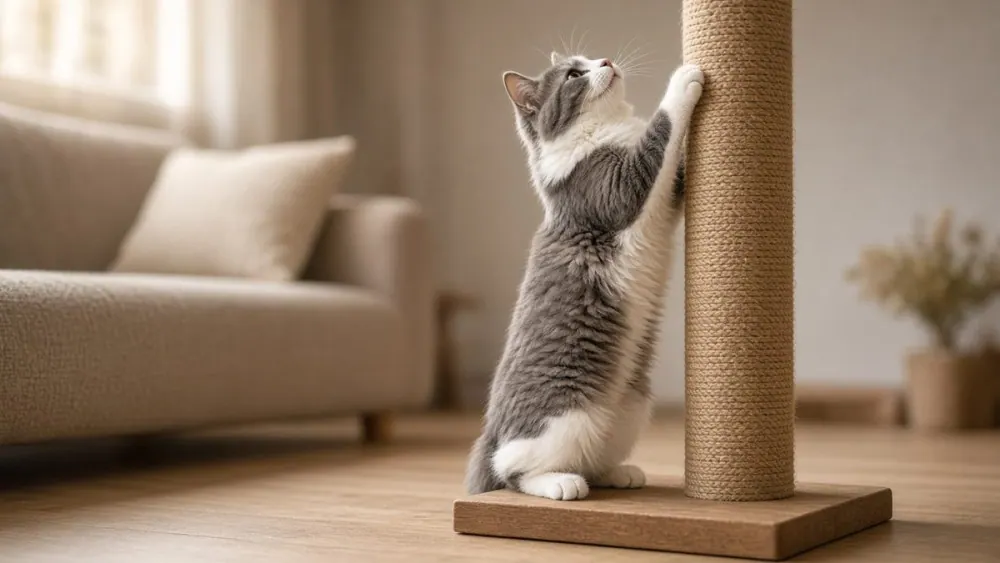
Cats scratch to stretch, shed old claw sheaths, and leave scent marks. If they do not have a surface they like, they will often pick a sofa corner or a door frame instead. A dedicated scratcher will not automatically save your furniture, and it is not a treatment for anxiety, but it is the most practical first step. Place it where the cat already scratches, keep it sturdy, and match the shape to how your cat actually uses their claws: straight up, stretched out on the floor, or both.
If you are giving a scratcher as a Christmas present, our Christmas gifts for cats guide includes the 32-inch SmartCat post and advice on placing it where the cat already scratches.
For general feline health context, the Merck Veterinary Manual cat-owner pages are a reliable starting point, and your veterinarian should guide individual decisions.
This shortlist covers four in-stock options that work in different ways: a 32-inch woven-sisal post with a wide base, a 22-inch kitten-size sisal post, a large cardboard lounge for cats that prefer a horizontal scratch, and a sisal mat you can put on the floor or attach to a wall. We are not lab-testing these in a living room. We are comparing current listings, published sizes, and the jobs each shape is built for. For more on the behavior itself, see our guide to why cats scratch. If you also want climbing and a high perch, start with our best cat trees for indoor cats.
As an Amazon Associate, we earn from qualifying purchases.
Quick picks
- Best tall sisal post: SmartCat Ultimate Scratching Post, 32-inch beige — a 16-by-16-inch base and woven sisal tall enough for a full-body stretch. The post itself is light, so the wide base and a level floor matter.
- Best for kittens and small cats: MECOOL 22-inch sisal post, beige — an 11.8-inch square base and a hanging ball, clearly sized for kittens or smaller cats. Do not buy this height for a large adult that needs a full stretch.
- Best cardboard lounge: Conlun large oval scratcher bed — a 19.7-by-13.8-inch corrugated bowl the listing rates for cats up to 20 pounds, including a packet of catnip.
- Best floor or wall sisal mat: FUKUMARU 23.6-by-15.7-inch sisal mat — a thin mat you can leave on the floor or attach with the included tapes or with screws. Test adhesives before you stick anything to paint.
Comparison table
| Product | Best for | Size (listing) | Surface | Good to know |
|---|---|---|---|---|
| SmartCat Ultimate, 32-inch | Adult cats that scratch vertically and like a full stretch | 16” L x 16” W x 32” H, 2.2 lb | Woven sisal | Wide base, two-screw assembly. The post is light; keep it on a level floor. |
| MECOOL 22-inch, beige | Kittens or smaller cats | 11.8” L x 11.8” W x 22” H, 3.31 lb | Sisal post, carpeted MDF base and top, hanging ball | The same brand also sells a 34-inch adult size; this ASIN is the 22-inch kitten size. Remove the ball if your cat chews string. |
| Conlun large oval scratcher | Cats that scratch and nap on a horizontal surface | 19.7” L x 13.8” W x 3.5” H | High-density corrugated cardboard, enclosed base | Listing says up to 20 lb. Cardboard still sheds some fibers. Catnip is included. |
| FUKUMARU sisal mat | A low-profile pad for the floor, a sofa corner, or a wall | 23.6” L x 15.7” W x 0.39” H | Natural sisal | Ships rolled; flatten it first. Tapes can mark paint, so test a hidden spot or use screws where that is allowed. |
Stock, colors, and pack counts change. Confirm the size on the listing, especially on the MECOOL page, which also offers a taller adult post under a different selection. A scratcher that is too short is one of the more common reasons an adult cat keeps using the sofa.
How to choose a scratching post
Watch your cat for a day before you buy. If they rear up on the arm of the couch, they probably want a tall, stable vertical post. If they pick at the carpet or the edge of a rug, a horizontal cardboard lounge or a sisal mat will be a closer match. Many cats will use both, which is why a post plus a floor scratcher is often more effective than one tall tree alone.
Height matters for a vertical post. A 22-inch post can be plenty for a kitten and too short for a long-bodied adult. A 32-inch post is the classic “full stretch” height. The base should be wide enough that the post does not tip when the cat leans into a serious scratch. A light post with a wide base, like the SmartCat, can work on a firm, level floor; a narrow base under a determined adult is a poor bet.
Sisal and tight jute are usually better scratching surfaces than loose carpet. Carpeted posts can feel familiar, but they also look a lot like household carpet and may wear into loops that catch a claw. Cardboard is cheap, replaceable, and popular with cats that like to rake a horizontal surface, but it flakes. Put a cardboard lounge on a washable mat if you do not want fibers on a dark rug.
Place the new scratcher beside the furniture that is already being used, not in an unused spare room. When the cat uses the scratcher, let them finish the stretch. If you need a play session to build the habit, a wand toy around the base is more useful than dangling strings left on the post unsupervised; see our best toys for cats on Amazon.
1. Best tall sisal post: SmartCat Ultimate Scratching Post (32-inch, beige)
The SmartCat Ultimate post is a simple, tall column: 32 inches of woven sisal on a 16-by-16-inch base. Assembly is two screws. The listing highlights a full vertical stretch and a wide base meant to reduce tipping. That combination is why this style of post shows up in so many buying guides, and the beige 32-inch model was in stock from Amazon when we checked.
The honest limitation is weight. The listing puts the whole post at 2.2 pounds. Stability comes from the wide base and from putting it on a level, firm floor, not from a heavy column. If your floors are slick or the post sits on a thick, soft rug, it can still walk or wobble. A heavier adult cat that climbs the post, rather than just scratching it, may need a sturdier tree instead of a single column.
There is no condo, no perch, and no hanging toy. That is the point: a clear, sisal target. If you also want a place to nap up high, pair it with a cat tree rather than expecting this post to do both jobs.
2. Best for kittens and small cats: MECOOL 22-inch sisal post (beige)
The MECOOL 22-inch post is shorter and less expensive than the SmartCat, with an 11.8-inch square base, a sisal-wrapped post, a carpeted MDF base and top, and a hanging ball. The listing is explicit: this size is designed for kittens or smaller cats. The same product page also offers a 34-inch size for adult cats, so check the size selector before you check out. The link above is for the 22-inch beige post, which was in stock when we checked.
A 22-inch post is a reasonable starter for a growing kitten that cannot yet use a tall, tippy tower, or for a small adult that already scratches at that height. It is the wrong height for a large cat that rears up on a sofa back. The narrower base is also less forgiving if a heavier cat leans hard. The maker’s “never tip over easily” language is marketing; treat the published 22-inch, kitten-oriented size as the real guidance.
The hanging ball can help a kitten discover the post, but take it off if the cat chews the string or the toy starts to fray. Spot-clean the carpeted base as needed, and retighten the screws after the first week of enthusiastic use.
3. Best cardboard lounge: Conlun large oval scratcher bed
The Conlun large oval scratcher is a low, concave cardboard bowl: 19.7 by 13.8 by 3.5 inches, with an enclosed base that is meant to cut down on loose flakes. The listing describes high-density corrugated board and corn-starch glue, rates the large size for cats up to 20 pounds, and includes organic catnip. This is the pick for a cat that already rakes the carpet, a rug, or the seat of a chair.
It will not replace a tall post for a cat that wants a full vertical stretch, and cardboard is still a consumable. Even a “low mess” lounge will shed some fibers. Set it on a washable mat, flip or replace the pad when the flutes are shredded, and do not treat the 20-pound figure as a structural rating for a cat that jumps into the bowl from a high piece of furniture.
Catnip can help a first introduction, but it is optional. If your cat ignores catnip, you can still rub a little used bedding in the bowl and place the lounge right next to the rug they already prefer. Keep extra cardboard away from a cat that likes to eat it; swallowing a lot of fiber is a reason to call your veterinarian, not a reason to buy a bigger lounge.
4. Best floor or wall sisal mat: FUKUMARU 23.6-by-15.7-inch mat
The FUKUMARU sisal mat is a thin, 23.6-by-15.7-inch pad, about 0.4 inches thick. You can leave it on the floor, use it as a doormat-style scratcher, or attach it to a wall, door, or the side of a sofa with the included tapes or with screws. That flexibility is the reason it is on this list: it goes where the damage is already happening.
The mat ships rolled. Flatten it under a rug or some books before you expect a cat to use it, or it will curl at the edges. If you use the adhesive tapes, test a hidden spot first. Tapes can pull paint, wallpaper, or veneer, especially in a rental. Screws are more secure on a wall you are allowed to mark, and they avoid a mat that peels off mid-scratch.
A mat is not a full-stretch post. It is a good match for a cat that scratches along a carpet or the side of a couch, and it is easy to vacuum. It will not keep a determined vertical scratcher off a door frame by itself. Pair it with a tall post if your cat uses both directions.
How to introduce a scratcher, and when to replace it
Put the scratcher between the cat and the furniture they already use, or right beside it. Rub a little of the cat’s scent on the surface, and let them approach it on their own. Some people temporarily make the old target less appealing with a cover or a double-sided tape made for furniture, but the new scratcher still has to feel better than the sofa. Do not punish scratching; it is normal cat behavior.
Replace a cardboard lounge when the flutes are worn smooth or the bowl collapses. Rewrap or retire a sisal post when the fiber is shredded down to bare wood or loose loops that can catch a claw. Remove hanging toys that fray. A wobbly post should be tightened or moved to a firmer floor before you keep encouraging the cat to use it.
A scratcher is not veterinary care. Sudden, intense scratching, new irritability, or a cat that stops jumping may be pain or illness. Those changes deserve a vet visit, not a second post.
FAQ
If you take one thing from this guide, let it be this: buy the shape your cat already uses, at a height they can fully stretch, and put it beside the furniture they already scratch. A 32-inch sisal post in the wrong room will lose to a sofa that is in the right one.